Science · Technology · Policy · Global Collaboration
Provisional programme · Updated 14 November 2026

Space Resources
Initiative III

Tokyo 2026

26–27 November 2026
The University of Tokyo, Hongo Campus · Hybrid

Steve Squyres
Steve SquyresBlue OriginIN PERSON
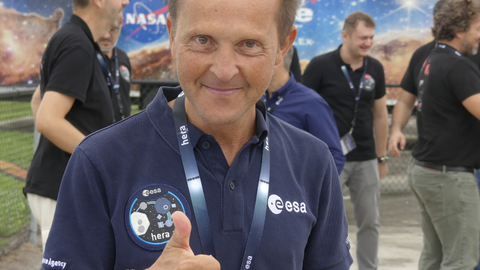
Patrick Michel
Patrick MichelCNRS / Côte d’Azur Observatory
Hera Science Principal Investigator
ONLINE
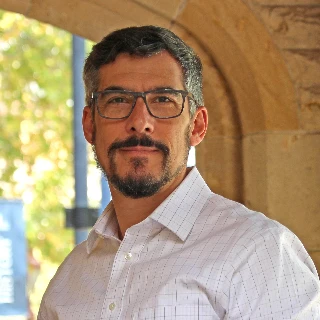
Erik Asphaug
Erik AsphaugUniversity of Oslo
Professor
ONLINE
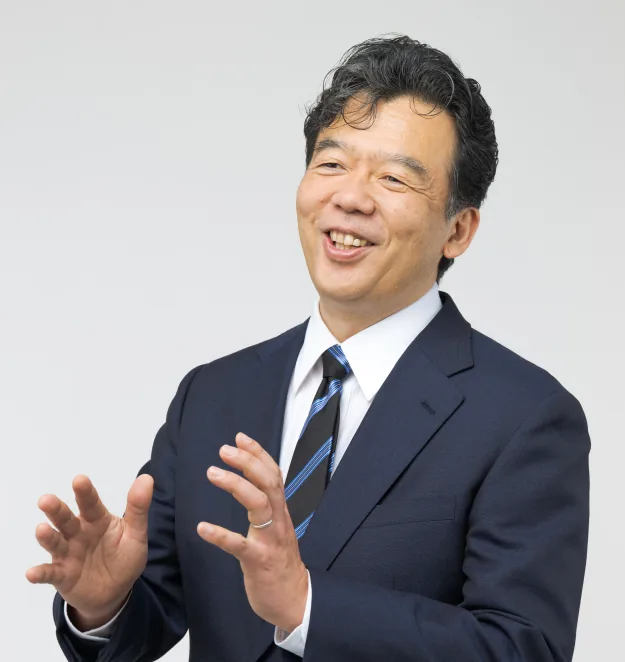
Masaki Fujimoto
Masaki FujimotoJAXA / ISASONLINE
Angel Abbud-Madrid
Angel Abbud-MadridColorado School of MinesIN PERSON
John Culton
John CultonAdelaide UniversityIN PERSON
Kathryn Hadler
Kathryn HadlerESRICONLINE
Hirdy Miyamoto
Hirdy MiyamotoThe University of TokyoIN PERSON
Hosted by

Center for Space Resources and Innovation (CSRI), The University of Tokyo

CACE · International research & education collaboration
CSRIThe University of Tokyo
Japan · Host
CSRColorado School of Mines
United States
ATISRAndy Thomas Institute for Space Resources
Adelaide University · Australia
ESRICEuropean Space Resources Innovation Centre
Luxembourg

In coordination with the Center for Space Resources, Colorado School of Mines; the Andy Thomas Institute for Space Resources, Adelaide University; and ESRIC. About CACE

This provisional programme is subject to change, including speakers, presentation content and times. Please check this page for the latest updates.

All times are JST (UTC+9). Both days include a 90-minute lunch break; Friday closes at 18:00. Flash presentations are two minutes with one slide per speaker.

Meeting information & registration26 Nov · Day 127 Nov · Day 2Free participation · Registration closes 20 November
DAY 1 · 2026-11-26

From context and research infrastructure to exploration and collection

Session 1 · 09:00–10:25 · Big picture: context and direction of space resources

Establish the exploration experience, geological evidence and mission context.

09:00–09:1010 min
Hirdy Miyamoto / CSRI · Opening

Opening

Introduce the questions linking headline science, technology verification and international collaboration.

In person
09:10–09:4030 min · incl. Q&A
Headline keynote
Steve Squyres/Blue Origin · Chief Scientist

Off-Earth Sustainability: Space Resources at Blue Origin

Space resources at Blue Origin and their role in off-Earth sustainability.

In person
09:40–10:0020 min · incl. Q&A
Invited lecture
Laszlo Kestay/USGS · Former Director, Astrogeology Science Center

Geological knowledge for space-resource exploration

Our geologic knowledge of different resources on the Moon and asteroids is highly variable, suggesting that a diversity of exploration strategies are needed

Online
10:00–10:2525 min · incl. Q&A
Invited lecture
Teun van den Dries/Karman+ · CEO

Standard Water

Asteroid water as fuel in space.

Karman+’s perspective on using asteroid water as fuel in space.

In person
Break and networking

Session 2 · 10:45–12:15 · Academia & CACE: organising research and demonstrations

Share centre capabilities and research gaps, then draw on economic questions and DSI experience to define joint CACE research and demonstrations.

10:45–11:0015 min · incl. Q&A
CACE keynote
Angel Abbud-Madrid/Colorado School of Mines · Director, CSR

CACE / Mines: Academic and Research Activities across the Space Resources Value Chain

Academic and research activities at Mines across the space resources value chain, and collaboration through CACE.

In person
11:00–11:1515 min · incl. Q&A
CACE keynote
John Culton/Adelaide University · Director, ATISR / Associate Professor

CACE / Adelaide: resources for sustained lunar operations

CACE / Adelaide: integrating resource use into sustained lunar missions, infrastructure, maintenance and operations.

In person
11:15–11:3015 min · incl. Q&A
CACE host-centre address
Hirdy Miyamoto / The University of Tokyo, CSRI

LDA, TSUKIMI and opportunities for joint development in Japan

Concrete opportunities for joint development and testing in Japan through LDA, TSUKIMI and Kita-Shikahama.

In person
11:30–11:4010 min · incl. Q&A
Topic contribution · input to CACE discussion
Jeffrey Cleveland/Center for Space Resources, Colorado School of Mines · Adjunct Faculty (Economics)

Can We Achieve Economic Sustainability in the Space Economy?

Economic sustainability in space and the evidence needed to assess it.

Online
11:40–11:5010 min · incl. Q&A
Topic contribution · input to CACE discussion
Mark Sonter/Off Earth Resources · Director

Asteroid resources: access now imminent, lessons and changes since the DSI and Planetary Resources attempts in the mid 2010s.

A forward-looking assessment of asteroid resource development, focusing on what has changed to improve its prospects since the DSI and Planetary Resources efforts of the mid-2010s, with lessons from those experiences.

Online
11:50–12:0010 min · incl. Q&A
Topic contribution · collaborative development through CACE
Patrick Cooney/Colorado School of Mines · PhD Student / Graduate Research Assistant

Advancing Lunar Ice Mining Architectures through Standardization, Systems Integration, and Collaborative Development

A common catalogue of lunar ice-mining systems, standardised performance and interface descriptions, and a capability-gap matrix to identify priorities for collaborative development through CACE.

In person
12:00–12:1515 min
CACE panel
Mark Sonter (online), Patrick Cooney (in person), and further discussants

CACE discussion

Discuss joint research and demonstration priorities, and access to facilities and data, drawing on economic questions, lessons and changes since DSI and similar efforts, and the proposed standardisation of lunar ice-mining systems.

In person + online
Lunch & networking · 90 min

Session 3 · 13:45–14:40 · JAXA exploration, flight experience and the Space Strategy Fund

Japan’s R&D investment, planetary-science direction and flight-proven exploration robotics.

13:45–14:0015 min · incl. Q&A
Special invited address
Hiroshi Sasaki/JAXA Space Strategy Fund · Advisor / General Producer

Japan’s Space Strategy Fund and international collaboration

Japanese R&D investment and practical entry points for collaboration with overseas universities and companies.

In person
14:00–14:1515 min · incl. Q&A
Special invited address
Masaki Fujimoto/JAXA Vice President · Director General, ISAS

Hayabusa2 and MMX: Japan’s planetary-exploration direction

Hayabusa2 and MMX: Japan's planetary-exploration direction and its connections to space-resource science.

Online
14:15–14:4025 min · incl. Q&A
Invited lecture
Tetsuo Yoshimitsu/JAXA/ISAS · Professor

From MINERVA to SLIM / LEV-1: lessons from flight

From MINERVA to SLIM/LEV-1: demonstrated mobility and autonomous operation, and lessons from flight development.

In person
Break

Session 4 · 14:50–16:27 · Exploration and resource assessment: what is where, and how to verify it

Connect remote sensing, subsurface structure, material properties and navigation to resource assessment and surface exploration.

14:50–15:1020 min · incl. Q&A
Featured research lecture
Yasuko Kasai/Institute of Science Tokyo · Professor, TSUKIMI PI

Resource Exploration on the Moon, Mars, and Jupiter’s Icy Moons: What Can and Can’t We Do with Terahertz Remote Sensing?

What terahertz observations can and cannot measure, connecting TSUKIMI and related instruments to resource-investigation requirements.

In person
15:10–15:3020 min · incl. Q&A
Featured research lecture
Junichi Haruyama/JAXA/ISAS · Assistant Professor

Potential for Utilizing Vertical Holes and Subsurface Caverns on the Moon and Mars

Vertical holes and subsurface caverns on the Moon and Mars, and the observations and field investigations needed to assess their use.

15:30–15:355 min · incl. Q&A
Topic contribution
Nick Barnett/Interstellar Mapping & Interstellar Innovation · Engineer / CEO

Lunar Volatiles- Beyond the Poles

Lunar Volatiles- Beyond the Poles: hypotheses and models for lunar volatiles outside the polar regions, and observations needed to test them.

In person
15:35–15:4510 min · incl. Q&A
Early-career research talk
Lauri Siltala/The University of Tokyo · Project Researcher

Improved Methods for Estimating the Dielectric Constant of the Lunar Surface

Methods for estimating lunar dielectric properties from Mini-RF and Diviner, including temperature dependence and uncertainty.

In person
15:45–15:5510 min · incl. Q&A
Early-career research talk
Tomohiro Takemura/Adelaide / The University of Tokyo · Postdoctoral Researcher

Radar Polarimetric Characterization of Asteroid Surfaces Using Data from Australia’s SHARP: Prospects for Future Resource Exploration

Polarimetric characterisation of asteroid surfaces with SHARP radar and its potential contribution to resource investigations.

In person
15:55–16:0510 min · incl. Q&A
Contributed technical/research talk
Taichi Ikenaga/Soil and Rock Engineering · Deputy General Manager

Introduction to Radioisotope Instruments and Their Applications in Space Exploration

Conditions for applying radioisotope density and moisture instruments in exploration: RANCH, calibration, background radiation and stability.

In person
16:05–16:138 min · incl. Q&A
Contributed research talk
Sarah Dickinson / Australian Institute for Machine Learning

High-Fidelity Lunar Rendering for Vision-Based Terrain-Relative Navigation

Lunar rendering and terrain-relative navigation

In person
16:13–16:2714 min
Flash Talks A: Surfaces, ground properties and environments

Flash Talks A: Surfaces, ground properties and environments

7 named speakers, two minutes and one slide each. Individual times are listed below. Talks run consecutively; individual questions continue during breaks and networking.

  1. Teppei TakemotoThe University of Tokyo
    RANCH and radiation
  2. Ramon III Palinguba GregorioInstitute of Science Tokyo
    How Warm Is the Moon a Meter Down? Testing the Global Deep Regolith Conductivity Against the Apollo 15 and 17 BoreholesIn person
  3. Takuma IshiiThe University of Tokyo
    Dynamic Angle of Repose and Shear Strength Derived from Granular Avalanche Kinematics of Regolith SimulantsIn person
  4. Karlis SlumbaAdelaide University
    Geotechnical and Geophysical Investigation of Lunar Subsurface: Dynamic Cone Penetration and Seismic Methods
  5. Shiyu SanoHiroo Gakuen Senior High School
    Thermal Cycling Resistance Under Reduced Pressure of Lunar Regolith Simulant Consolidated by Ethanol-Mediated Alkali ActivationIn person
  6. Gilbert CauthornUniversity of North Dakota Department of Space Studies / Blue Marble Space Institute / Osaka Prefecture Suito Kokusai Astrobotany Research Program
    White-Clover Biomass Amendment as a Biological Conditioning Strategy for Radish Cultivation in Mars Global Regolith SimulantIn person
  7. Hiroki AidaThe University of Tokyo
    LDA Structural Integration and Prototype Development
Break

Session 5 · 16:35–17:50 · Collection and handling: excavating, sorting and transporting

Rock and ground stability, excavation, sorting, transport and vacuum testing.

16:35–16:5520 min · incl. Q&A
Invited lecture
Ömer Aydan/University of the Ryukyus · Retired Professor

Some thoughts on rock slope stability issues in Planetary Bodies

Rock-slope stability on planetary bodies and its implications for excavation, siting and safe operations.

In person
16:55–17:1520 min · incl. Q&A
Featured research lecture
Genya Ishigami/Keio University · Professor

Progress in Robotic Excavation, Sieving, Sorting, and Transport of Regolith (RESiSToR)

RESiSToR: integrating excavation, sieving, sorting and transport of regolith.

In person
17:15–17:3015 min · incl. Q&A
Technical contribution
Luke Bowersox / Karman+

Asteroid excavation concepts: from development and testing to the selected architecture

Compare excavation concepts developed and tested at Karman+, the evidence behind the selected architecture, test limitations and the next validation steps.

In person (planned)
17:30–17:4010 min · incl. Q&A
Contributed technical/research talk
Candela Solis Zampini/Space Resource Technologies · Systems Engineer

MATEAR: Moon Adaptive Technology for Extraterrestrial Architectural Robotics

Excavation, compaction and sintering within an integrated lunar construction robot.

In person
17:40–17:5010 min · incl. Q&A
Early-career research talk
James Hurrell/Keio University · Project Assistant Professor

Vacuum chamber lunar regolith simulant experimental development

Lunar-regolith simulant experiments under vacuum: methods, conditions and results.

In person

Day 1 synthesis · 17:50–17:55

Carry the main findings and unresolved questions into Day 2.

17:50–17:555 min
Hirdy Miyamoto / CSRI

Day 1 synthesis: questions to carry forward

The host summarises evidence and remaining verification needs from exploration and collection, linking them to extraction, utilisation and governance on Day 2.

In person
Move to reception
Networking receptionVenue and end time to be announced.
DAY 2 · 2026-11-27

From sampling, processing and use to frontier science and next collaborations

Session 6 · 09:00–10:00 · In-situ exploration and collection, continued: MMX and flight instruments

Connect MMX science and sampling with in-situ instruments for future resource exploration.

09:00–09:1515 min · incl. Q&A
Contributed technical/research talk
Yuta Shimizu/The University of Tokyo · Assistant Professor

MMX: A Journey to Explore the Origins of the Martian Moons

MMX science goals, the origins of the Martian moons, and the value of combining observations with returned samples.

In person
09:15–09:3520 min · incl. Q&A
Contributed technical/research talk
Hiroki Kato/JAXA · MMX C-Sampler

From Arrival to Continuity: Advancing from MMX C-Sampler to Space Robotics for Sustained ISRU Operations

From development and verification of the MMX C-Sampler to robotics for sustained ISRU operations.

In person
09:35–09:5015 min · incl. Q&A
Research talk
Makito Kobayashi/The University of Tokyo · LDA Deputy PI

Lunar Dielectric Analyzer: instrument development and verification

Measurement principles, instrument design and performance verification for lunar dielectric analysis.

In person
09:50–10:0010 min
Flash Talks B: Sampling, surface interaction and material properties

Flash Talks B: Sampling, surface interaction and material properties

5 named speakers, two minutes and one slide each. Individual times are listed below. Talks run consecutively; individual questions continue during breaks and networking.

  1. Kota SaitoKeio University
    Design and Preliminary Experimental Evaluation of a Magnet-Embedded Bucket Drum Excavation toward ISRUIn person
  2. Ryo YasufukuThe University of Tokyo
    Hayabusa2 landing and surface interaction
  3. Nijiro KatoInstitute of Science Tokyo
    Topographic Effects on Lunar Regolith Permittivity Derived from Orbital Terahertz-Wave Passive Remote Sensing ObservationsIn person
  4. Airi ToidaThe University of Tokyo
    Dielectric measurements and the PSJ study
  5. Kenshin TakahashiGakushuin University
    Applicability of Cavity Perturbation Theory to Bulk Spherical Samples as a Reference for Powder Permittivity MeasurementsIn person

Session 7 · 10:00–10:30 · Extraction, processing and ISRU power systems

Examine materials, processes, performance and verification for systems that turn local resources into power, oxygen and usable water.

10:00–10:1010 min · incl. Q&A
Contributed research talk
Tatsuwaki Nakagawa / University of Colorado

In-situ Resource Utilization (ISRU) Based Power Production System

ISRU-based power production

In person
10:10–10:2010 min · incl. Q&A
Contributed technical/research talk
Shugo Tsumura/Takasago Thermal Engineering · Chief Research Engineer

Development of Lunar Water Electrolysis System

Design, development and flight experience of a lunar water-electrolysis system, and the remaining steps to a surface demonstration.

In person
10:20–10:3010 min · incl. Q&A
Contributed technical/research talk
Shingo Miyamoto/Kurita Water Industries · Senior Chief Researcher

Kurita’s Activities for Water Resource Utilization in Deep Space

Water recovery and purification experience, and requirements for using water resources in deep space.

In person
Break

Session 8 · 10:50–12:00 · Utilisation I: propellants, construction materials and testing

Connect resource-use requirements to quality, throughput and test conditions, then use a ten-minute discussion across extraction and utilisation to identify the next technical tests.

10:50–11:1525 min · incl. Q&A
Featured research lecture
Hiroyuki Koizumi/The University of Tokyo · Professor

Asteroid Water as a Propellant: Feasible Missions, Suitable Thrusters, and Impure Propellants

Asteroid water as propellant: feasible missions, suitable thrusters and operation with impurity-containing water.

In person
11:15–11:2510 min · incl. Q&A
Contributed technical/research talk
Takatoshi Tajima/Obayashi Corporation · Civil Engineer

Study on manufacturing methods for Lunar base construction materials using in-situ resources

Manufacture and performance of lunar construction materials using microwave sintering and laser processing.

In person
11:25–11:3510 min · incl. Q&A
Contributed technical/research talk
Anna Metke/Space Resource Technologies · CEO

Preparing for the Next Generation of Lunar Missions: Assessing Testing Infrastructure Needs and Capabilities

Testing infrastructure needed for lunar equipment, gaps in capability, and ways to compare conditions and results across facilities.

In person
11:35–11:405 min · incl. Q&A
Contributed technical short talk
Jim Keravala/OffWorld / StellarWorld · CEO

Mobilizing Large-Scale Infrastructure for a Industrial Space Resources Era

Transport, power, construction and processing for large-scale space-resource infrastructure.

In person
11:40–11:5010 min
Flash Talks C: Processing, propulsion and experimental methods

Flash Talks C: Processing, propulsion and experimental methods

5 named speakers, two minutes and one slide each. Individual times are listed below. Talks run consecutively; individual questions continue during breaks and networking.

  1. Lucas-Brian ChristenThe University of Tokyo
    From Lunar Regolith to Aluminum through Laser-Based Thermal ProcessingIn person
  2. Kouto SakakuraTokyo University
    Preliminary Investigation of a Resistojet thruster Using Impurity-Containing Propellants for Lunar and Asteroid Resource UtilizationIn person
  3. Ryo WatanabeThe University of Tokyo
    Parabolic-flight campaign
  4. Shuu NakagawaThe University of Tokyo
    Meteorites in parabolic flight
  5. Yuta SugiharaThe University of Tokyo
    Vivaldi antenna
11:50–12:0010 min
Speakers from the extraction and utilisation sessions

Technical discussion: what must be demonstrated next?

Identify priority demonstrations around feedstock quality, processing throughput and extrapolation from ground tests to the lunar environment.

Hybrid
Lunch & networking · 90 min

Flash Talks D · 13:30–13:42 · Instruments, observations and granular physics

Connect neutron measurements, optical detectors, seismic and crater studies, and the physics of shape-dependent granular flow to understanding and testing planetary surface processes.

13:30–13:4212 min
Flash Talks D: Instruments, observations and granular physics

Flash Talks D: Instruments, observations and granular physics

6 named speakers, two minutes and one slide each. Individual times are listed below. Talks run consecutively; individual questions continue during breaks and networking.

  1. Alvin PraetThe University of Tokyo
    Neutron spectroscopy
  2. Yuna IsobeThe University of Tokyo
    Particle Angularity Controls Granular Flow under Vibration
  3. Lisa ZislinNagoya University
    Quantifying the Effect of Window Reflections on SiPM Optical Crosstalk in SST CamerasIn person
  4. Asaf AyalonNagoya University
    Time-Resolved Optical Study of Abrupt Dark-Current Changes in Silicon PhotomultipliersIn person
  5. Ginji EshimaFaculty of Engineering, The University of Tokyo
    From Apollo Seismic Observations to Portable Active Seismic Source (PASS) Surveys: Toward Site-Specific Characterization of the Lunar Shallow SubsurfaceIn person
  6. Jo TanabeThe University of Tokyo
    Craters in lunar permanently shadowed regions

Session 9 · 13:42–14:40 · Utilisation II: operations and commercial activity

Define conditions for sustained activity through human–robot teaming, operational data and commercial resource development.

13:42–14:0220 min · incl. Q&A
Featured research lecture
Anna Ma-Wyatt/Adelaide University · Professor of Psychology

What’s needed for effective human-robot teaming for lunar settlements?

Cognitive, operational and design requirements for effective human–robot teaming in lunar settlements.

In person
14:02–14:108 min · incl. Q&A
Contributed technical/research talk
Louis Burtz/JAOPS · Engineer

Designing Lunar Missions for Operational Data Sharing and Coordination

Designing lunar missions for operational data sharing, preservation and coordination.

In person
14:10–14:4030 min · incl. Q&A
Industry keynote
Hideari Kamiya/ispace · EVP, Strategy & Business Development

Toward a Sustainable Lunar Economy: Commercial Resource Development in Japan

Commercial resource development in Japan for a sustainable lunar economy: business requirements and expectations for research and technology.

In person

Session 10 · 14:40–15:30 · Law and the lunar environment: a case discussion led by Takeuchi

Use lunar activities to examine environmental measurements, operational coordination, the legal status of reactors and responsibilities to future generations.

14:40–14:422 min
Session lead · framing the case
Yu Takeuchi / Keio University

Framing the case: law and coordination of lunar activities

Lead the full 50-minute session. Use two opening minutes to frame the case, then connect scientific evidence, operations, nuclear-reactor status and future generations in the closing ten-minute panel.

14:42–14:5715 min · incl. Q&A
Scientific contribution · environmental measurements and standardisation
Yoshinori Takano/JAMSTEC · Director-General, EMS

The Astro-Ecosystem (ASX) : Key points for establishing rules for the era of manned Lunar missions

The ASX concept links standardisation of environmental measurements on the Moon and Mars with impact assessment. Common measures for observational data, material cycles and contamination control provide a scientific basis for rule-making.

In person
14:57–15:0710 min · incl. Q&A
Expert input · law and governance
Melissa de Zwart/Adelaide University · Professor of Space Law

Ensuring safe and sustainable lunar operations

Ensuring safe and sustainable lunar operations: distinguish operational agreements from unresolved governance questions around safety, interference and responsibility.

In person
15:07–15:158 min · incl. Q&A
Contributed research talk
Camille Bitton / Adelaide University

Powering Lunar Resource Activities: Is a Lunar Nuclear Reactor a “Space Object”?

Lunar nuclear reactors and the legal concept of a space object

In person
15:15–15:205 min · incl. Q&A
Topic contribution · law and governance
Sho Shimizu/The Japan Institute of International Affairs · Research Fellow

Protecting the Interests of Future Generations in Space Resource Activities

Protecting the Interests of Future Generations in Space Resource Activities: how future generations’ interests should inform resource activities.

In person
15:20–15:3010 min
Proposed law and governance panel

Law and governance panel

Coordination, environmental evidence and responsibility in shared lunar operations. Led by Yu Takeuchi; discussants to be announced.

In person + online

Session 11 · 15:30–17:25 · Frontier results: reduced-gravity experiments and asteroid science

Update established knowledge and open questions through DLR experiments/models, new Hera observations and Erik's orbital testbed.

15:30–15:5020 min · incl. Q&A
Invited lecture
Jens Biele + M. Sperl/DLR / University of Cologne

From ISS to Moon: Diagnostics and Modelling of Regolith

Regolith diagnostics and model validation in reduced gravity, from the ISS to the Moon.

In person + online (planned)
Break
16:00–16:4545 min · incl. Q&A
Headline keynote
Patrick Michel/CNRS / Côte d’Azur Observatory · Hera Science Principal Investigator

New Hera observations of the Didymos/Dimorphos binary asteroid system and implications for space resources

New Hera observations of the Didymos/Dimorphos binary asteroid system, including the structure and surface properties of Dimorphos, and their implications for space resources.

Online
16:45–17:2540 min · incl. Q&A
Headline keynote
Erik Asphaug/University of Oslo · Professor

Asteroid-Gravity Research Testbed in LEO

A low-Earth-orbit asteroid-gravity testbed to investigate the behaviour of material on celestial-body surfaces and its implications for sampling and processing.

Online

Session 12 · 17:25–18:00 · ESRIC perspective and overall wrap-up

Use the frontier results to identify the next joint research and verification tasks.

17:25–17:4520 min · incl. Q&A
CACE keynote
Kathryn Hadler/ESRIC · Director

CACE / ESRIC: European research and the next collaboration priorities

CACE / ESRIC: European resource-processing research, facilities for joint demonstrations and the next collaboration needs.

Online
17:45–18:0015 min

Wrap-up & closing

Use the frontier science and ESRIC perspective to identify established findings, missing evidence and next collaborations. Close at 18:00.

In person + online

This meeting is supported in part by JAXA SSF Program Japan Grant Number JPJXSSF24MX17002.