
Center for Space Resources
and Innovation
Japan’s First Center for Space Resource Development
SRI-III · TOKYO 2026
November 26–27, 2026
Free participation · Registration and abstract submission are open

SPACE RESOURCES INITIATIVE III
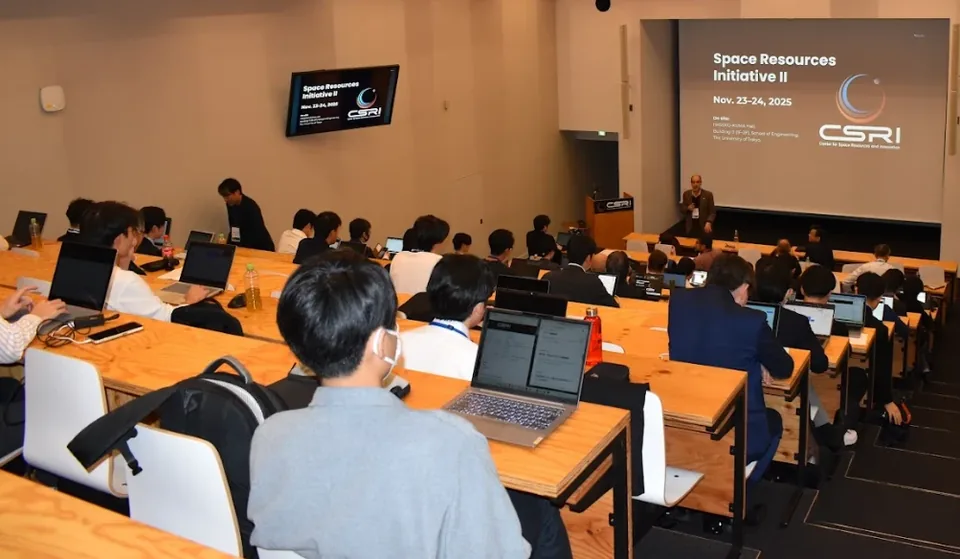
CSRI’s international forum
for space resources
November 26–27, 2026
The University of Tokyo, Hongo Campus
Participation is free.
Conceived and organized by CSRI, Space Resources Initiative (SRI) is a recurring international meeting series connecting science, technology and policy. Its third meeting, SRI-III, takes place at UTokyo’s Hongo Campus in November 2026.
SPACE RESOURCE SCIENCE
Understanding solar-system materials
as resources.
Where, and under what conditions, is it reasonable to use materials beyond Earth? With the finite nature of terrestrial resources and their environmental costs in view, CSRI investigates this question at the intersection of science, engineering, the humanities and social sciences.
We study the materials of the Moon and asteroids, assess transport and energy requirements, and examine technologies for acquisition, manufacturing and use. By connecting these questions with institutions and values, we seek to establish space resource science as an integrated academic field.
RESEARCH FOUNDATION / SPACE STRATEGIC FUND
The SX programme:
a foundation for CSRI’s research.
Space Resource Development Centre for Lunar Development
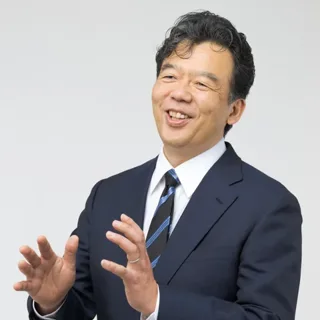
A major programme supporting CSRI’s research and development through funding, facilities and people. Under the Space Strategic Fund’s SX framework, universities and companies work together on exploration, acquisition, extraction, storage, transport and use of space resources.
Lead institution: the University of Tokyo. Principal Investigator: Hideaki Miyamoto. Additional support for shared research infrastructure helps develop experimental and evaluation facilities, industry collaboration and research talent.
Programme support ceiling
3.18billion JPY
Including shared research infrastructure support.
Subject to change following stage-gate reviews and other assessments.
INDUSTRY COLLABORATION / SX
Terrestrial expertise for space resources
Through the SX research hub, CSRI connects space businesses with companies whose expertise spans thermal systems, water treatment, measurement and resources. These collaborations link terrestrial technologies to prospecting, extraction, storage and use on the Moon.
Partner organisations include Takasago Thermal Engineering, Kurita Water Industries, Yokogawa Electric and KEYCOM. Sumitomo Metal Mining participates as a cooperating organisation.
INTERNATIONAL COLLABORATION
CACE: an alliance of
four research centres
Through CACE, CSRI connects instrument development with researcher exchanges, shared teaching and industry dialogue. Examples include LDA collaboration with Adelaide University, RANCH coordination with Mines, and a JSPS research stay from ESRIC at UTokyo.
RESEARCH PERSPECTIVES
Four perspectives on space resources
Ⅰ
Materials and resource potential
Where are water, volatiles, metals and minerals found, and in what form? We assess grade, distribution and physical properties alongside the feasibility of recovery.
Ⅱ
Transport and environment
Gravity, orbits, thermal conditions and radiation help determine where resources can reasonably be obtained and used. Transport and energy requirements are central research constraints.
Ⅲ
Manufacturing and utilization
Low gravity, vacuum and thermal conditions inform the design of extraction, processing, storage, manufacturing and reuse. Small-scale experiments help test the assumptions behind larger systems.
Ⅳ
Institutions and society
We examine rights and responsibilities, economic feasibility, environmental considerations and international cooperation. Dialogue through education, art and culture also informs the question of desirable activities in space.
LUNAR SCIENCE / EXPERIMENTS
Laboratory experiments for lunar science
The Lunar Dielectric Analyzer (LDA) measures the dielectric properties of lunar regolith. It was one of the first three astronaut-deployed science instruments selected by NASA in 2024 for Artemis, the programme that aims to return people to the lunar surface more than half a century after Apollo. LDA is the only one of those proposals led by an institution outside the United States.

PROJECTS IN FOCUS
Research and development in practice
CSRI connects the expertise of participating faculty and academic and industry partners, from exploration and measurement to resource use. These highlights introduce major programmes and faculty contributions to space missions.
MARTIAN MOONS / MMX
Contributing across disciplines to MMX
CSRI faculty contribute to JAXA’s Martian Moons eXploration (MMX) mission across science and engineering. Their work includes surface science by Hideaki Miyamoto and landing dynamics and safety studies involving Takehiro Himeno. Tetsuo Yoshimitsu also participates, bringing complementary expertise to the mission.
Hideaki Miyamoto is PI of the Surface Science and Geology Science subteam (SSG-SST). Students also take part in ground experiments with the Phobos simulant UTPS, surface-property studies and exploration-data analysis.
EXPERIMENT & DATA
Simulants and quantitative image analysis
CSRI develops and supplies simulants for the Moon, Mars and Phobos for instrument development and material testing, on a paid basis. Development and supply are handled by the Miyamoto Laboratory. The work supports sample selection and test design based on composition, grain size and physical properties.
CSRI also supports research and technical collaboration on automatic detection of rocks and particles using machine learning, handled by the Miyamoto Laboratory. Follow the links to discuss collaboration or specific testing and analysis requirements.
EDUCATION & PARTICIPATION
Study, discuss and collaborate
Graduate research, international meetings and collaboration with industry connect a wide range of expertise to space resources. Professional experience and knowledge from outside the space sector can offer valuable starting points for research.
PUBLICATIONS
Research through papers and perspectives
Explore the questions, experimental methods and findings behind our research through publications and public resources.
Connect with CSRI
Contact the CSRI office to discuss research collaboration, researcher exchanges, education or events.