RESEARCH & PROJECTS
Research & projects
What to use, where, and how.
Studying the conditions for resource utilization.
The presence of material alone does not make a usable resource. Composition, physical properties, transport energy, local processing, economics and institutions must be considered together. CSRI studies the potential to obtain and use resources in space and the value such activities could offer society on Earth.
FIELDS OF RESEARCH
Four research perspectives
Ⅰ
Materials and resource potential
Where are water, volatiles, metals and minerals found, and in what form? We assess grade, distribution and physical properties alongside the feasibility of recovery.
- Planetary geology and mineralogy
- Prospecting and physical measurements
- Simulants and observational data
Research questions and methods
How does the amount present differ from the amount that can be used?
Integrating spectroscopy, imagery and physical measurements with laboratory tests of composition, grain size, porosity and ice content.
Ⅱ
Transport and environment
Gravity, orbits, thermal conditions and radiation help determine where resources can reasonably be obtained and used. Transport and energy requirements are central research constraints.
- Orbit and transport planning
- Thermal conditions and energy budgets
- Site selection and system assessment
Research questions and methods
Under what conditions does local supply compare favourably with transport from Earth?
Comparing trajectory and transport models, energy budgets, equipment mass and lifetime to assess resource systems.
Ⅲ
Manufacturing and utilization
Low gravity, vacuum and thermal conditions inform the design of extraction, processing, storage, manufacturing and reuse. Small-scale experiments help test the assumptions behind larger systems.
- Water and metal extraction
- Granular materials and structures
- Local manufacturing, repair and reuse
Research questions and methods
How can acquisition, processing and use be combined?
Testing extraction and processing with simulants, measuring granular behaviour, and evaluating materials, structures and process models.
Ⅳ
Institutions and society
We examine rights and responsibilities, economic feasibility, environmental considerations and international cooperation. Dialogue through education, art and culture also informs the question of desirable activities in space.
- Law, policy and cooperation
- Resource economics, ethics and environment
- Education, culture and public dialogue
Research questions and methods
Who supports space resource utilization, and through which institutions?
Combining comparative institutional studies, economic assessment, environmental and ethical inquiry, and interdisciplinary dialogue.
PROJECTS IN FOCUS
Research and development in practice
CSRI connects the expertise of participating faculty and academic and industry partners, from exploration and measurement to resource use. These highlights introduce major programmes and faculty contributions to space missions.
ARTEMIS / LDA
An astronaut-deployed science instrument for Artemis
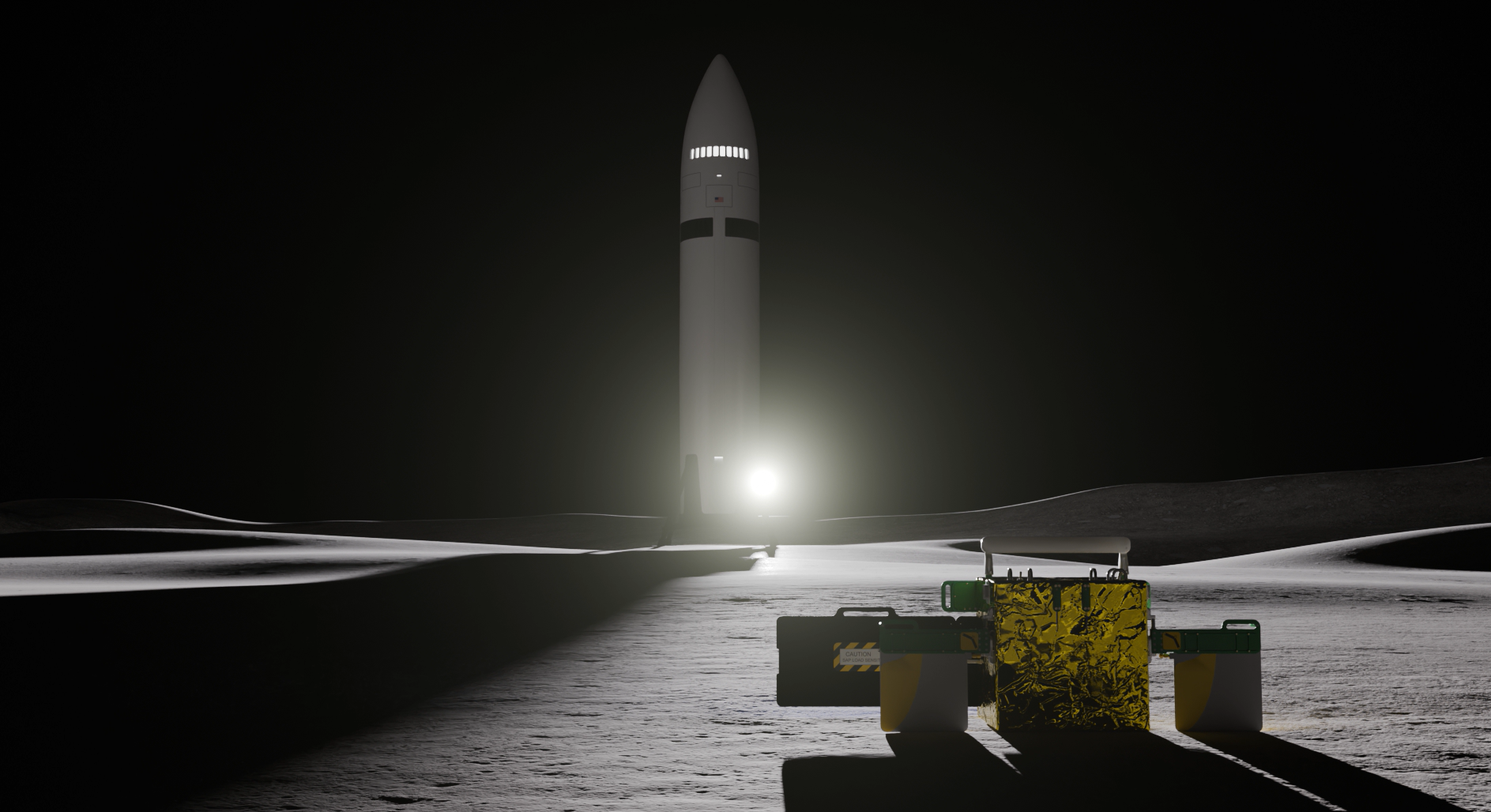
The Lunar Dielectric Analyzer (LDA) measures the dielectric properties of lunar regolith. It was one of the first three astronaut-deployed science instruments selected by NASA in 2024 for Artemis, the programme that aims to return people to the lunar surface more than half a century after Apollo. LDA is the only one of those proposals led by an institution outside the United States.
Principal Investigator: Hideaki Miyamoto. An international team is developing the instrument and conducting laboratory experiments to investigate near-surface composition, structure and the possible presence of ice.
SPACE STRATEGIC FUND / SX
Space Resource Development Centre for Lunar Development
A major programme supporting CSRI’s research and development through funding, facilities and people. Under the Space Strategic Fund’s SX framework, universities and companies work together on exploration, acquisition, extraction, storage, transport and use of space resources.
Lead institution: the University of Tokyo. Principal Investigator: Hideaki Miyamoto. Additional support for shared research infrastructure helps develop experimental and evaluation facilities, industry collaboration and research talent.
Maximum support: JPY 3.18 billion, including shared research infrastructureSubject to change following stage-gate reviews and other assessments.
MARTIAN MOONS / MMX
Contributing across disciplines to MMX
CSRI faculty contribute to JAXA’s Martian Moons eXploration (MMX) mission across science and engineering. Their work includes surface science by Hideaki Miyamoto and landing dynamics and safety studies involving Takehiro Himeno. Tetsuo Yoshimitsu also participates, bringing complementary expertise to the mission.
Hideaki Miyamoto is PI of the Surface Science and Geology Science subteam (SSG-SST). Students also take part in ground experiments with the Phobos simulant UTPS, surface-property studies and exploration-data analysis.
EXPERIMENT & DATA
Simulants and quantitative image analysis
CSRI develops and supplies simulants for the Moon, Mars and Phobos for instrument development and material testing, on a paid basis. Development and supply are handled by the Miyamoto Laboratory. The work supports sample selection and test design based on composition, grain size and physical properties.
CSRI also supports research and technical collaboration on automatic detection of rocks and particles using machine learning, handled by the Miyamoto Laboratory. Follow the links to discuss collaboration or specific testing and analysis requirements.
LUNAR MEASUREMENTS / LDA
Reading the lunar surface through its electrical properties
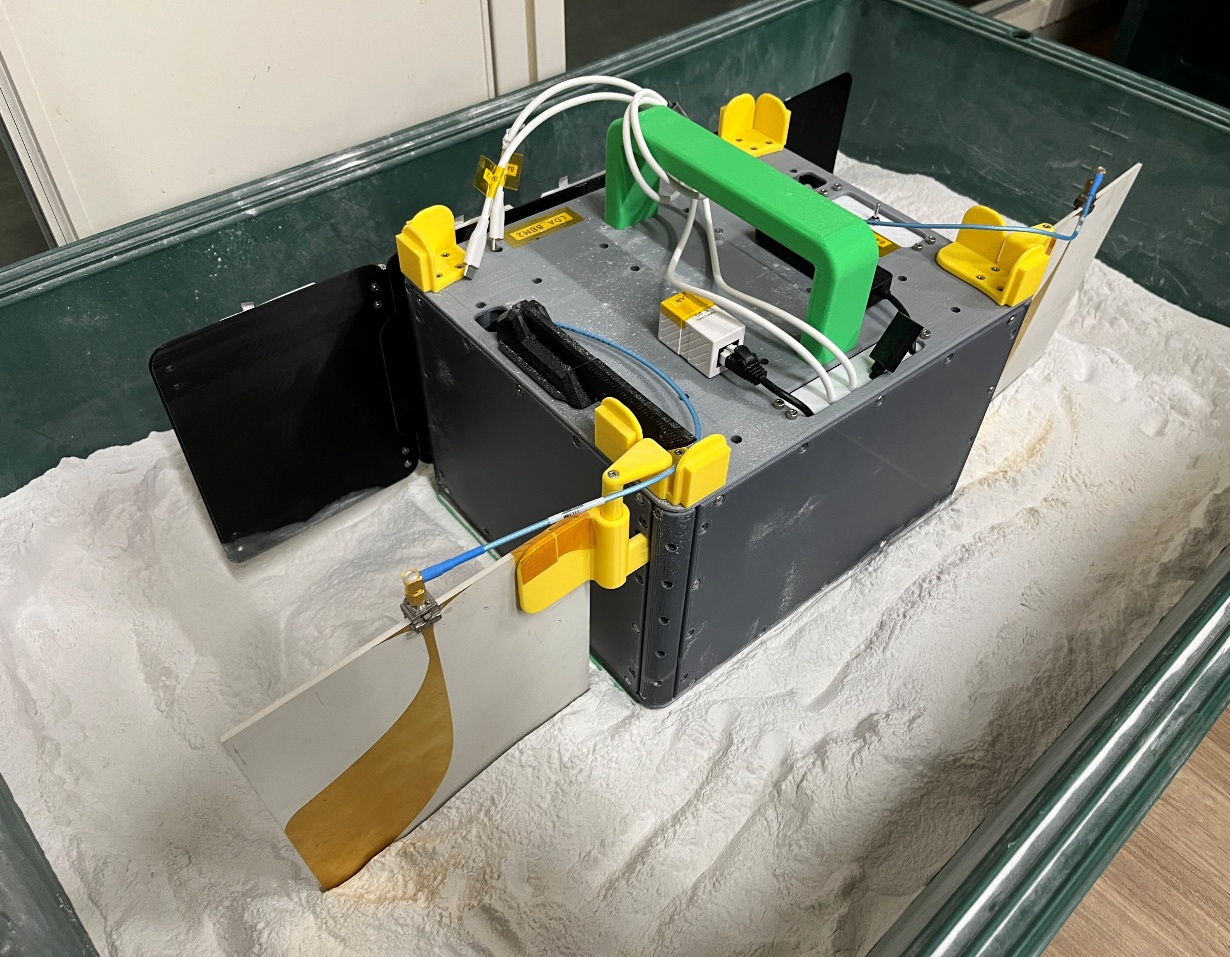
LDA is an instrument designed to place sensors in contact with lunar regolith—the loose grains and rock fragments covering the Moon—and measure its dielectric response. The aim is to learn about local material while limiting disturbance of the surface.
Dielectric response depends on composition, packing density, temperature and the presence of ice. Laboratory experiments and numerical models help interpret these effects. The science concept also includes repeated measurements as a lander’s moving shadow cools and warms the ground.
SHARED RESEARCH INFRASTRUCTURE
Supporting exploration with simulants and laboratory experiments
CSRI develops simulants for the lunar highlands and mare, Mars and Phobos as shared resources for instrument testing and physical-property studies. The Miyamoto Laboratory handles development and supply, connecting this work with researchers and companies using the materials.
For example, measurements of samples with different compositions and densities can be compared with instrument responses and heat-transfer calculations. Connecting science observations, instrument development and resource-use experiments helps researchers interpret and compare their results.
SELECTED PUBLICATIONS
Papers and presentations by participating faculty
Examples of faculty research in exploration, measurement and engineering, with authors, publication or conference details and links to the original sources.
2026.09
Improving compact antennas through their geometry
Wide, tilted slots are introduced into a compact Vivaldi antenna on a high-permittivity substrate to improve low-frequency gain. The reported performance is evaluated through full-wave electromagnetic simulations.
Yuta Sugihara, Hideaki Miyamoto, Makito Kobayashi
Microwave 2(3), 14 (2026)
2026.05
Investigating subsurface water ice with neutrons
This study addresses the characterization of subsurface water ice through active neutron counting with different source-to-detector distances.
Teppei Takemoto, Hideaki Miyamoto, Yuta Shimizu
Advances in Space Research (2026)
2025.11
Measuring lunar simulants in the terahertz band
Laboratory measurements of polarized terahertz emission show that apparent bulk permittivity can be estimated even for simulants with lunar-like surface roughness, supporting the interpretation of remote sensing.
First Passive Permittivity Measurement of Lunar Regolith Simulant at Terahertz Band
Makito Kobayashi, Takayoshi Yamada, Hideaki Miyamoto, Tomohiro Takemura, Airi Toida, Yasuko Kasai
The Planetary Science Journal 6, 266 (2025)
2021
The surface of Phobos and the UTPS simulant
A study of the surface environment of Phobos and the design and evaluation of simulants for scientific and engineering tests.
Surface environment of Phobos and Phobos simulant UTPS
Hideaki Miyamoto et al.
Earth, Planets and Space 73, 214 (2021)
2025.07
Evaluating the dynamics of a safe MMX landing
A collaborative study involving Takehiro Himeno, examining spacecraft landing behaviour and safety for MMX’s planned landing on Phobos.
Masatsugu Otsuki, Mitsuhisa Baba, Takane Imada, Masaki Takahashi, Takehiro Himeno et al.
35th Astrodynamics Symposium (2025), conference presentation
2019.03
Reading the history of Ryugu from spacecraft observations
Seiji Sugita and colleagues combine Hayabusa2 observations of landforms, colour and thermal properties to investigate Ryugu and the evolution of its parent body.
The geomorphology, color, and thermal properties of Ryugu: Implications for parent-body processes
Seiji Sugita et al.
Science 364, eaaw0422 (2019)
Research across disciplines and institutions
Participating university researchers and overseas centres connected through CACE support interdisciplinary work. Contact the CSRI office to discuss research collaboration or technology evaluation.