PEOPLE & EXPERTISE
People & expertise
Researchers and expertise
across the university.
Faculty expertise spans planetary science, resource engineering, exploration and manufacturing technologies, energy, and social institutions. Together, these fields provide the academic foundations for space resource research. Explore each researcher’s areas of expertise and research interests below.

Hideaki “Hirdy” Miyamoto
Planetary geology, regolith and space resource exploration
Combines spacecraft data, experiments with regolith simulants and numerical modelling to study planetary surfaces. Connects missions including LDA and MMX with the measurement and use of space resources.
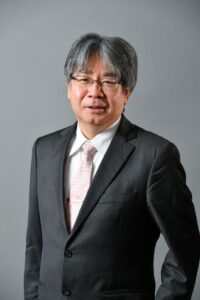
Yasuhiro Kato
Resource geology, rare earths and global material cycles
Investigates how rare metals and rare earths form and become concentrated, using the geochemistry of rocks and sediments. Studies frontier mineral resources and changes in the global environment.
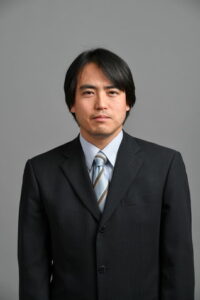
Kentaro Nakamura
Marine mineral resources, ore genesis and Earth evolution
Uses marine surveys and chemical analyses of ores and rocks to investigate mineral deposits and their formation. Examines how resource formation records the evolution of Earth, its environment and life.

Kazutaka Yasukawa
Resource geochemistry, data analysis and material cycles
Combines precise chemical analysis, multivariate statistics and numerical models to study the distribution and origin of marine resources, alongside material cycles and climate change recorded in geological samples.

Kimihiro Hashiba
Rock mechanics, mining systems and long-term stability
Evaluates rock deformation, failure and time-dependent behaviour through experiments and mechanical models. Develops methods for improving mining systems and assessing the long-term stability of underground structures.

Yutaro Takaya
Resource separation, recycling and CO₂ fixation
Studies separation and recovery of valuable metals from waste batteries and marine minerals. Also explores the use of waste concrete and steelmaking slag for environmental remediation and CO₂ fixation.

Hajime Kobayashi
Microbial engineering, energy conversion and resource production
Studies energy and material conversion through microbial symbioses, including interactions with electrodes. Applications include methane and hydrogen production and the treatment of mining wastewater.

Katsunori Fukui
Excavation, mining systems and subsurface engineering
Studies resource development as an integrated system of excavation, ground support and material transport, with attention to efficiency and safety in demanding environments such as the deep sea and deep subsurface.

Takeshi Tsuji
Exploration geophysics, rock physics and CO₂ storage
Develops data analysis, instruments and digital rock physics to reveal subsurface structures and fluid behaviour. Research spans CO₂ storage, geothermal systems and exploration of the Moon and Mars.

Takashi Goda
Numerical analysis, uncertainty quantification and decision-making
Develops numerical methods, including quasi-Monte Carlo algorithms, to quantify uncertainty. Studies how additional observations and information can improve decisions and system optimisation.
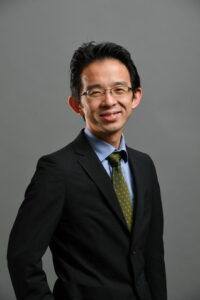
Shinsuke Murakami
Industrial ecology, mineral economics and sustainability assessment
Uses material flow and stock analysis and life cycle assessment to examine resource circulation and environmental impacts. Studies mineral markets and policies to evaluate sustainable resource use.
Eiji Saitoh
Spintronics, quantum materials and energy conversion
Investigates transport phenomena associated with spin currents in materials. Explores links between spin, heat and electricity, alongside new spintronic materials and experimental techniques.
Tetsuya Ishida
Concrete engineering, multiscale analysis and durability
Links cement microstructure to structural behaviour through multiscale analysis, predicting the long-term performance of concrete. Studies durable infrastructure and materials and construction methods with lower environmental impacts.
Takehiro Himeno
Aerospace propulsion, thermal fluids and liquid management in low gravity
Combines experiments and numerical analysis to study thermal and fluid behaviour in spacecraft tanks and engines, including the retention and delivery of liquid propellants under changing gravity and acceleration.
Ryu Funase
Small spacecraft, guidance and control, and deep-space exploration
Studies spacecraft systems and guidance and control for reaching deep space with small, lightweight probes. Developments such as EQUULEUS support new approaches to Solar System exploration.
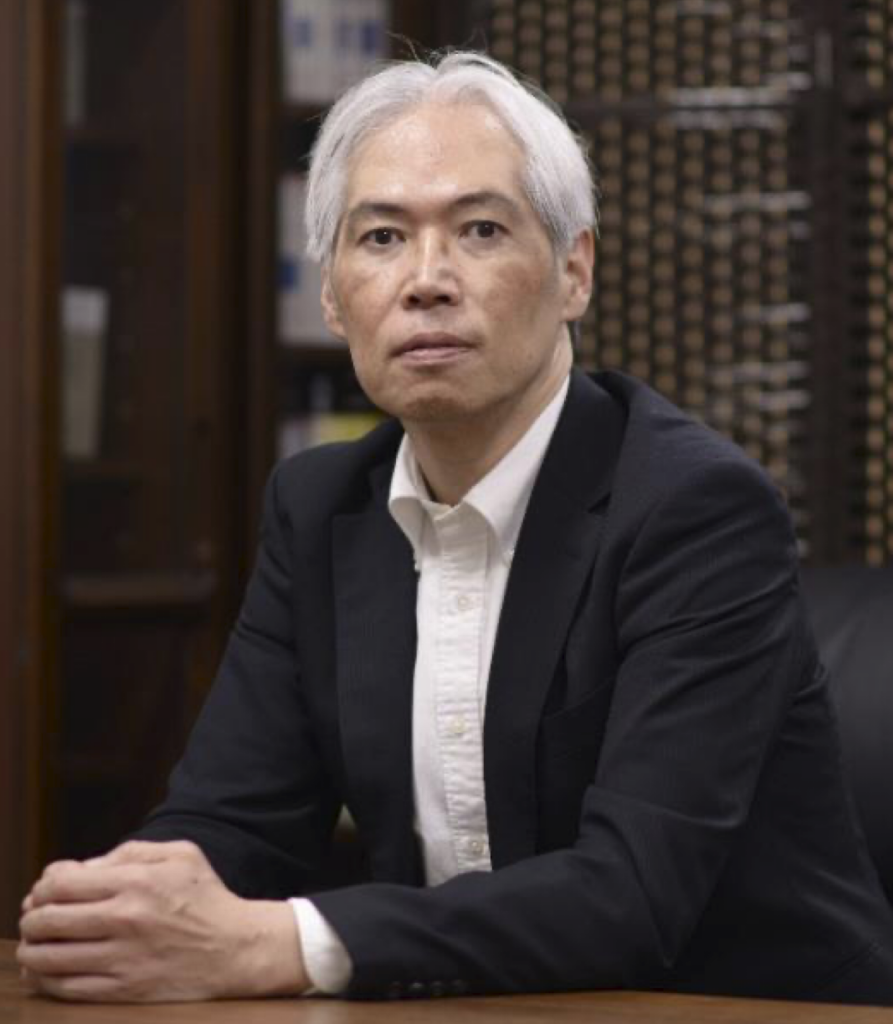
Naohiko Sugita
Precision manufacturing, production engineering and biomedical machining
Studies precision processing by examining material microstructure and microscopic machining phenomena. Applications range from hard and brittle materials to tissue removal and measurement technologies for surgery.
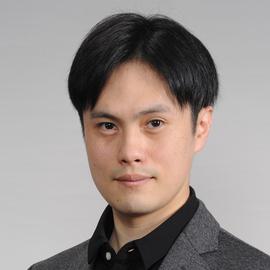
Moju Zhao
Aerial robots, reconfigurable mechanisms and motion control
Develops multilink robots that can change shape in flight and combine aerial movement with manipulation and other forms of locomotion. Research integrates mechanism design, modelling and control.
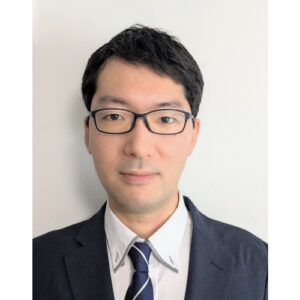
Toru Kizaki
Precision machining, machine tools and measurement-based control
Develops in-process measurements and compensation for thermal deformation and accuracy changes in machine tools. Integrates sensing and control to combine flexibility with precision in manufacturing.
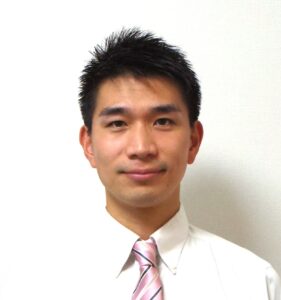
Yusuke Ito
Ultrafast optical measurement and precision laser processing
Uses ultrafast measurements to quantify material responses to ultrashort laser pulses. Studies how electronic and stress dynamics can be controlled and used in new precision processing methods.
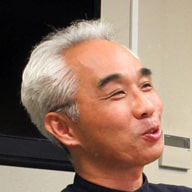
Tetsuo Yoshimitsu
Space robotics, small rovers and surface exploration
Develops small rovers for movement and observation on asteroids and the Moon. Missions including MINERVA-II and LEV-1 demonstrate mobility and exploration systems in low-gravity environments.

Seiji Sugita
Planetary exploration, comparative planetology and spectroscopy
Uses spacecraft imaging and spectroscopy to investigate surface materials and landforms. Work including observations with Hayabusa2’s optical navigation camera explores the origins and evolution of planetary bodies.

Yoshio Takahashi
Environmental geochemistry, chemical speciation and water–rock interaction
Uses methods such as X-ray spectroscopy to determine elemental chemical states and explain their enrichment and transport in natural samples. Studies resources and environmental processes at atomic and molecular scales.

Shogo Tachibana
Cosmochemistry, planetary materials and reaction kinetics
Investigates chemical reactions central to Solar System formation and evolution through experiments and extraterrestrial materials. Connects studies of dust and meteorites with small-body exploration and returned samples.

Hiroyuki Kagi
High-pressure science, mineralogy and water in planetary interiors
Uses high-pressure experiments, diffraction and spectroscopy to investigate minerals, ice and hydrogen. Studies the structure of planetary interiors and the forms in which water is retained at depth.

Hiroyuki Koizumi
Space propulsion, plasma engineering and water-based propulsion
Studies propulsion from miniature satellite thrusters to high-power electric systems. Develops engines, including water-based propulsion, to extend spacecraft mobility and mission capabilities.
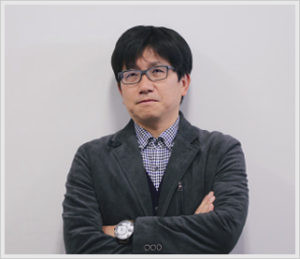
Ichiro Yoshikawa
Planetary atmospheres, ultraviolet observations and instrumentation
Develops ultraviolet instruments and space telescopes to study planetary atmospheres and plasmas. Uses observations to investigate atmospheric origins and changes over time.
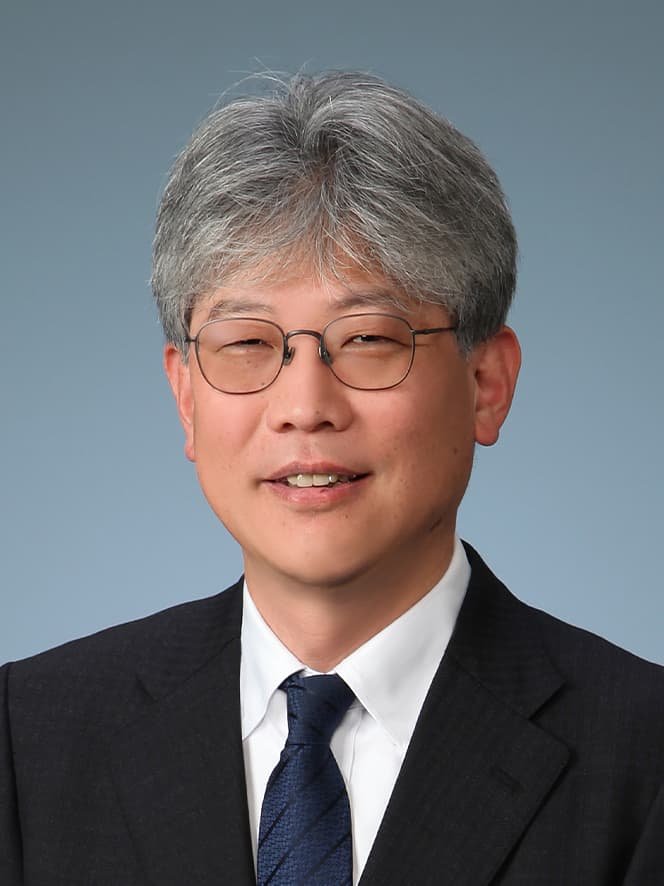
Tomochika Tokunaga
Groundwater, crustal fluids and the subsurface environment
Studies interactions between groundwater flow and rock deformation. Evaluates coastal groundwater environments and long-term subsurface stability to support environmentally sound use of the geosphere.
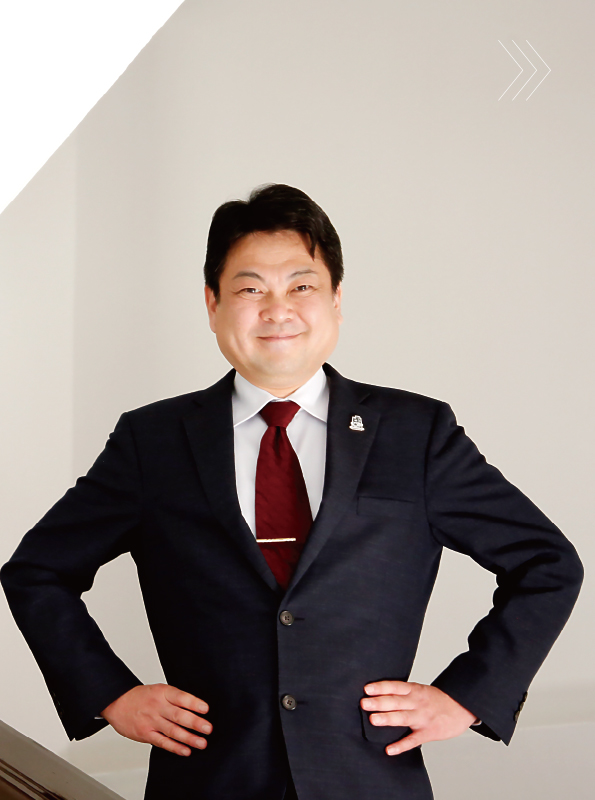
Masakazu Sugiyama
Photovoltaics, semiconductors and hydrogen energy
Studies technologies for storing renewable energy as hydrogen, including combinations of high-efficiency photovoltaics and water electrolysis. Work spans materials, devices and energy systems.
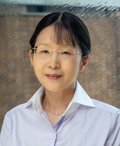
Kanako Seki
Space plasmas, atmospheric escape and space weather
Combines satellite observations and numerical experiments to investigate interactions between the solar wind and planetary environments, including atmospheric escape, space weather and implications for habitability.
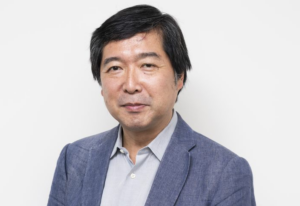
Hideaki Shiroyama
Public administration, international governance and technology policy
Studies the interface between science, technology and public policy through public administration and international governance, addressing institutions and policy processes for introducing new technologies into society.

Sotaro Shibayama
Science policy, R&D management and scientometrics
Studies science policy and research management using scientometric approaches to research activity, examining evidence-based ways to design policy and organise research and development.

Takashi Mikouchi
Planetary materials, meteoritics and mineral analysis
Examines meteorites and returned samples using electron microscopy, X-ray methods and spectroscopy. Mineral textures and compositions reveal histories of formation, heating and alteration in Solar System bodies.
Hideki Endo
Comparative anatomy, functional morphology and natural history collections
Uses dissection and three-dimensional analysis to investigate relationships between animal form, function and evolution. Builds and preserves natural history collections as a foundation for future research.